My Science
Understanding Crops at the Molecular Level. Modern agriculture increasingly depends on our ability to understand the genetic architecture underlying complex traits.
Crop Genomics
Using high-throughput sequencing and molecular data to understand genetic variation in agriculturally important crops.
Plant Disease Resistance
Investigating the genetic basis of resistance to pathogens affecting African crops, with a current focus on Napier grass head smut.
Computational Biology
Integrating genotypic and phenotypic information through statistical genomics, variant analysis and computational workflows.
Plant Biotechnology
Applying molecular technologies to crop improvement, including transformation and emerging genome-editing approaches.
Climate-Resilient Agriculture
Developing knowledge and technologies that can contribute to more resilient agricultural production systems.
Current Research
The Napier Grass Genomics Project
Decoding the Unseen: The Potential of Artificial Intelligence in Reshaping Napier Grass Breeding
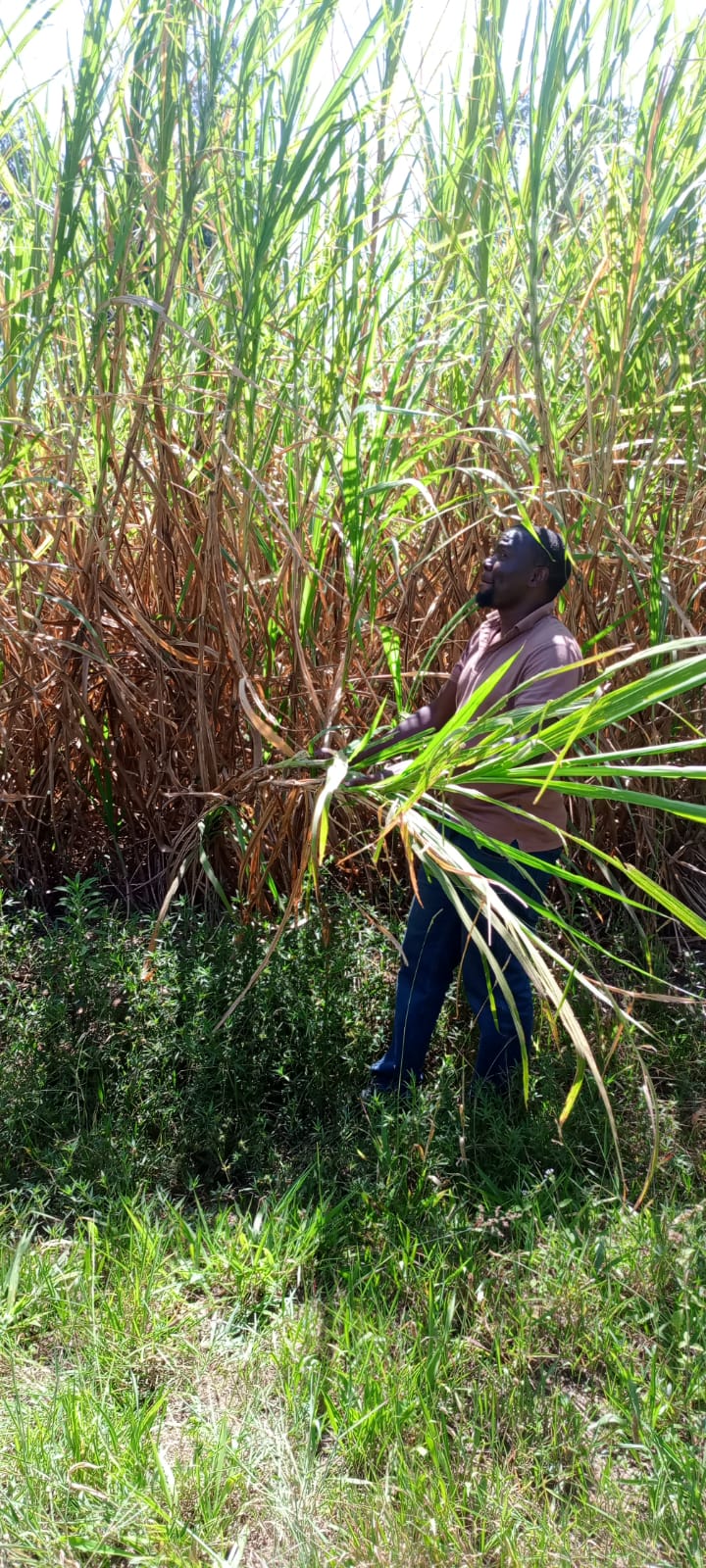
Across the smallholder farms of Sub-Saharan Africa, Napier grass (Cenchrus purpureus) serves as the quiet backbone of the zero-grazing dairy industry. Yet, it faces an existential double threat from Head Smut disease (caused by the systemic fungus Ustilago kamerunensis) and Napier Grass Stunt Disease.
Untangling the biology of Napier grass to breed resistant varieties presents a monumental challenge due to its complex allotetraploid double-genome architecture. While standard Genome-Wide Association Studies (GWAS) provide a starting point, they inherently struggle to capture non-additive epistatic interactions and dosage variations.
From Linear GWAS to Deep Learning
- Variational Autoencoders (VAEs): Imputing missing sequencing reads and unearthing subtle non-additive interactions for disease resistance.
- Graph Convolutional Networks (GCNs): Mapping the dynamic topological web of interconnected SNPs and expression pathways to identify "Master Regulator Hubs" against systemic plant defense.
- Computer Vision (CNNs): Scoring subtle disease progression metrics with high throughput to calculate highly accurate Genomic Estimated Breeding Values (GEBVs).
From Genomics to the Future of Breeding
The Future of African Plant Breeding Will Be Data-Driven
The traditional breeding cycle is powerful, but increasingly we have technologies capable of revealing the genetic architecture of complex traits at unprecedented resolution.
Genomics can help us move from:
Observation → Measurement → Prediction → Selection
The opportunity is to combine Genomics + Phenotyping + Bioinformatics + AI + Breeding to develop crops that are:
- Disease resistant
- Climate resilient
- Nutritionally improved
- Productive
- Locally adapted
This is the scientific direction I am interested in pursuing.
Biotechnology & Emerging Technologies
From Genetic Discovery to Crop Improvement
My work in plant biotechnology spans molecular genetics, plant transformation and emerging genome-editing technologies. My professional development includes specialized training in CRISPR/Cas-based genome editing for climate-smart crops, as well as advanced training in quantitative genetics, molecular markers and plant breeding.
Genome Editing
Targeted modification of genes underlying important agricultural traits.
Molecular Breeding
Using molecular markers and genomic information to accelerate selection.
Genomic Selection
Exploring predictive approaches for complex traits.
AI for Crop Improvement
Integrating computational intelligence with genomic and phenotypic datasets.